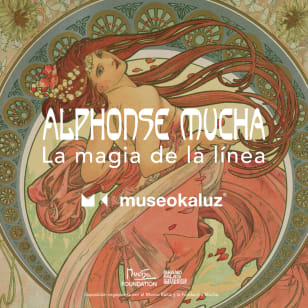
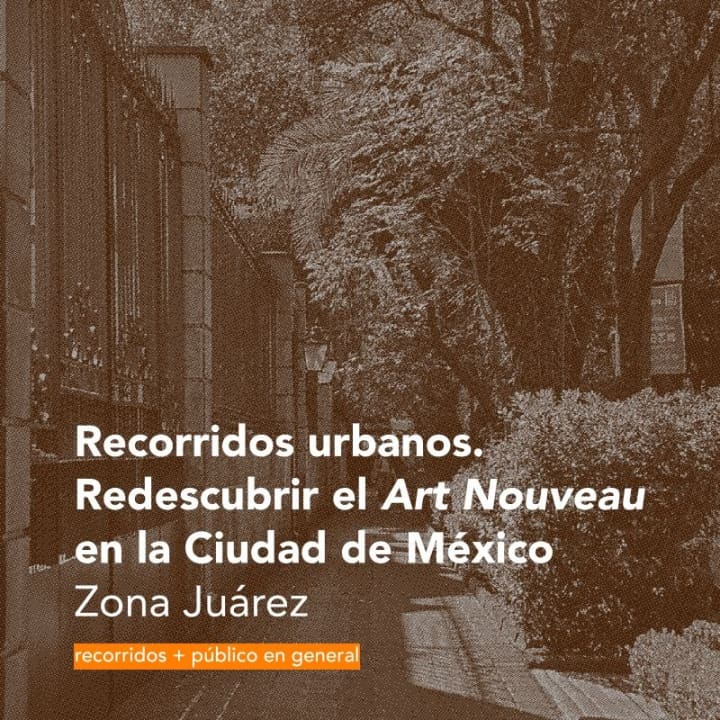

As part of the public program for the exhibitions Alphonse Mucha. The Magic of the Line and Art Nouveau. Symbolism and Art Nouveau in Mexico, the Kaluz Museum invites you to explore three fundamental areas to understand the development of Art Nouveau in Mexico City: the Historic Center, the Juárez neighborhood, and the Roma neighborhood.
Accompanied by a specialist and using a portable radio guide system, participants will learn about selected buildings and spaces while identifying the architectural, ornamental, and symbolic characteristics of Art Nouveau and the modernity of its time.
Each route is constructed as a narrative: architecture, characters, ways of life, urban transformations, and lost heritage allow each building to be understood as part of a larger story of the city.
Routes: Historic Center, Juárez Neighborhood, Roma Neighborhood.
General Info
📅 Date and time: select directly from the calendar.
📍 Location: each experience has its own meeting point.
♿ Accessibility: the tours take place in public spaces, and accessibility conditions may vary depending on the route.
👤 Age: all ages
❓ You can consult the frequently asked questions and their answers here
Description of the routes
Historic Center · The Stage of Modernity
In the old core of the capital, theaters, department stores, hotels, institutional buildings, and shops incorporated new materials, technologies, and ornamental languages that coexisted with historic architecture. The route allows you to recognize this overlapping of times and styles, discover details of a city striving to present itself as modern and cosmopolitan, and reconstruct the memory of now-lost fundamental buildings.
-
Dates: November 7 and 21, December 12 and 26, January 9 and 23, February 6
-
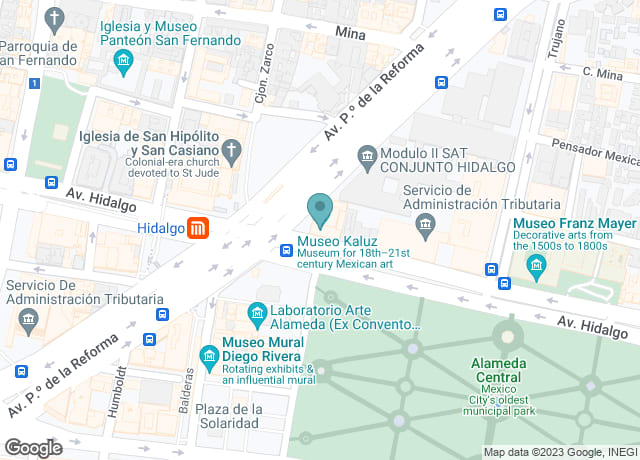
Meeting point: Kaluz Museum
Juárez Neighborhood · The Forms of Modern Life
The Juárez neighborhood was one of the main residential areas of the Porfirian bourgeoisie and reflected the cosmopolitan aspirations of society at the turn of the century. Its residences, shops, and housing complexes allow us to observe the incorporation of international architectural models, as well as the continuities and transformations of a territory where fragments of that modern city still survive.
-
Dates: November 1 and 15, December 6 and 20, January 3, 17, and 31, and February 14.
-
Meeting point: Reforma 365
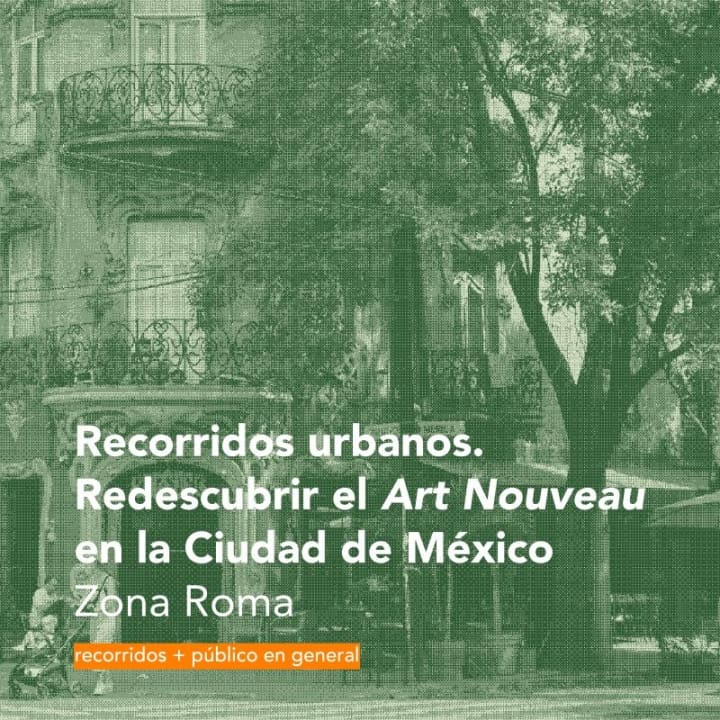
Roma Neighborhood · Living the New City
The city's expansion into new residential neighborhoods profoundly altered the urban experience. In the Roma neighborhood, houses, gardens, streets, ironwork, window openings, reliefs, and plant motifs show how new architectural and decorative languages penetrated private life and how Art Nouveau was appropriated and reinterpreted in the Mexican context.
-
Dates: November 14, December 5 and 19, January 2, 16, and 30, February 13.
-
Meeting point: Zacatecas and Orizaba in Roma